
Job 1:1
“There was a man in the land of Uz whose name was Job; and that man was blameless and upright, and one who feared God [with reverence] and abstained from and turned away from evil [because he honored God].” AMP
When we think of Job we immediately think of intense suffering and hardship — and we should. The first two chapters of the book detail the extreme suffering he endured. But what is easily missed is the hint of the “culture” this God-fearing man built in his home — the behaviors, beliefs and social environment that impacted his children.
Job 1:4 states:
“His sons used to go and hold a feast in the house of each one on his day, and they would send and invite their three sisters to eat and drink with them.”
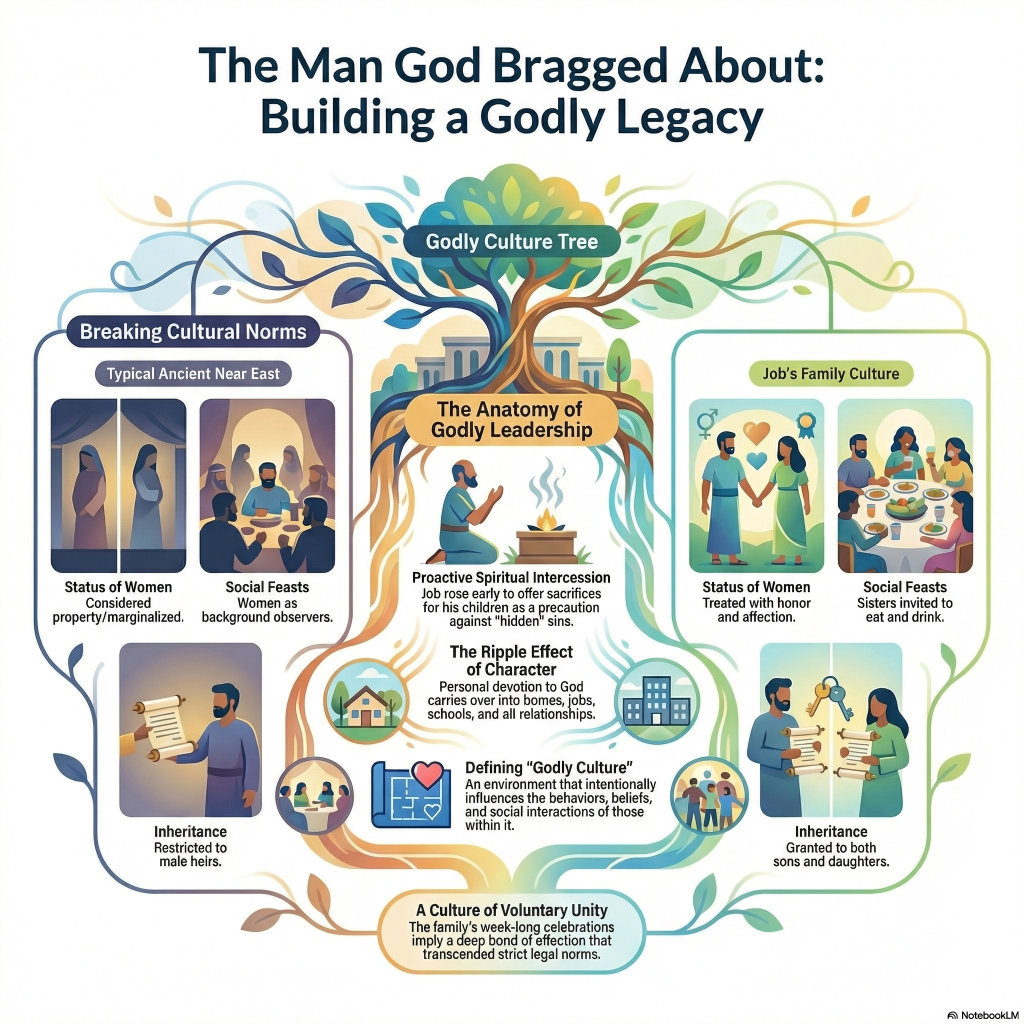
In Ancient Near East culture, women were legally and socially marginalized. They had few rights, no inheritance and were considered a little more than property. If women did attend feasts held by men, they were there as background observers, or provided some sort of entertainment that was usually lustful in nature.
But the first chapter of Job describes something different — something that was very much counter to the culture of the day. The fact that the brothers sent and invited their sisters to eat and drink with them, suggests a high level of voluntary honor and affection for their sisters.
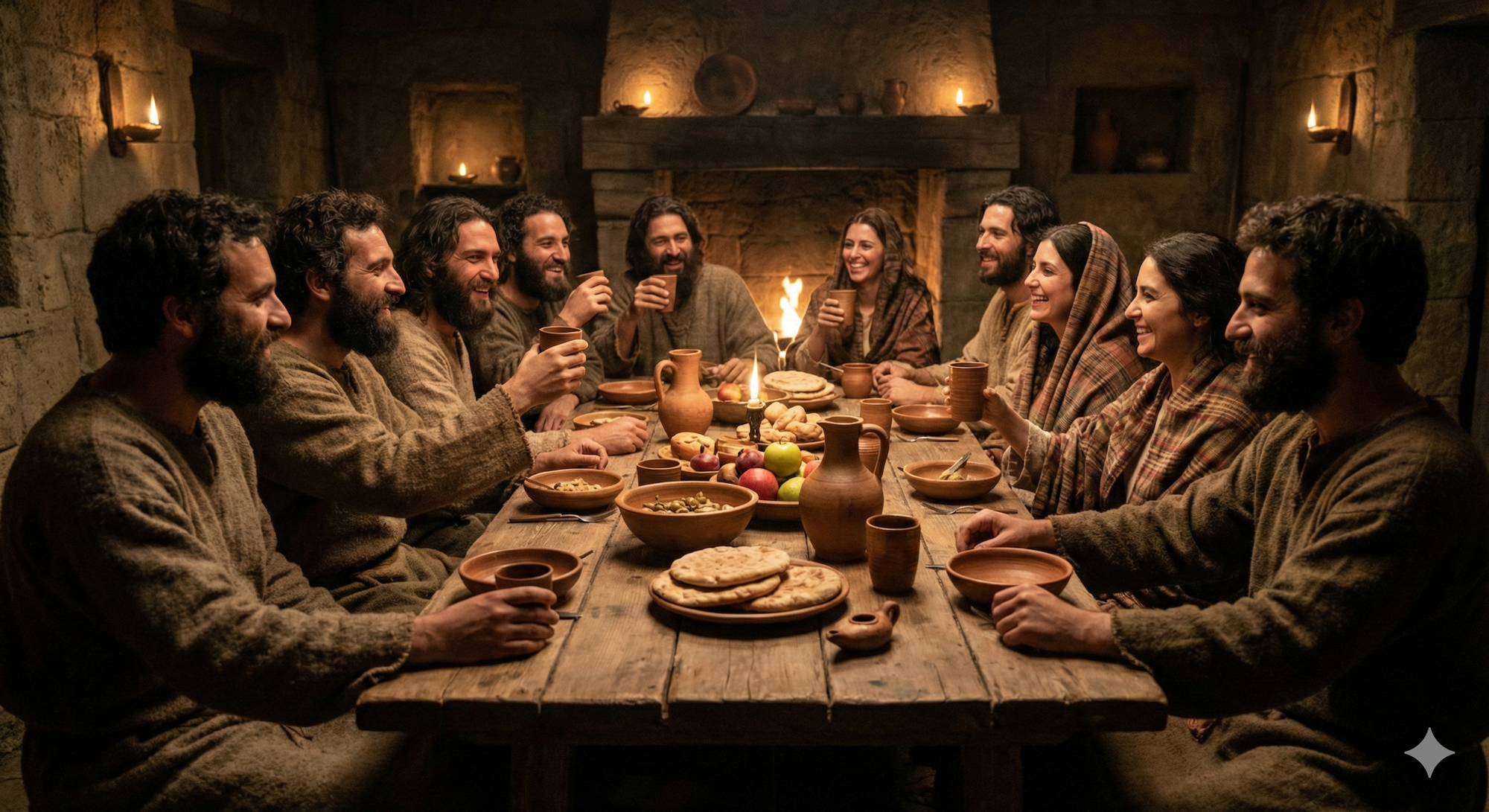
Bringing their sisters into their homes for a week-long celebration, implies a family bond that transcended the strict legal norms of the day — a fondness and closeness among the siblings, where the sisters were treated more as equals as opposed to marginalized objects. (Note: in Job 42:15, Job’s daughters were even given inheritances which were culturally given only to sons.)
This godly man, Job, seems to have created a culture of unity, harmony and affection among his children.
Job 1:5 suggests the nature of the celebrations Job’s sons hosted. After each one, as a precaution, he rose early the next day and made a sacrifice for each child thinking:
“…Perhaps they sinned and cursed God in their hearts.”
If the feasts were wild, drunken orgies, then you would think Job’s thoughts would have been more directed towards specific ungodly behaviors. But his routine sacrifices were along the lines of “just in case” his children sinned.
Now, we are not told explicitly of the nature of the relationships between the siblings, nor of the nature of the celebrations, but knowing the culture of the day, the details given suggested to me that:
This man described in Job 1:1, whom God bragged about (Job 1:8), built a godly culture in his home.
It also made me think and ask some tough questions about myself:
- What kind of culture (environment influencing behaviors) am I building in my home?
- Am I planting godly seeds in the lives of my wife, children, grandchildren and those with whom I influence?
- Am I living the kind of life where God can brag about me as He did Job in verse 1:8?
And what about you — can God brag about you?
A godly character and devotion to the Lord doesn’t stay isolated to ourselves; it carries over into our homes, jobs, places of worship, school, groups…everywhere we develop relationships.
Perhaps we need to model ourselves after the man on whom God bragged.
 100 Days To A Better Life Through Proverbs
Leave a comment